
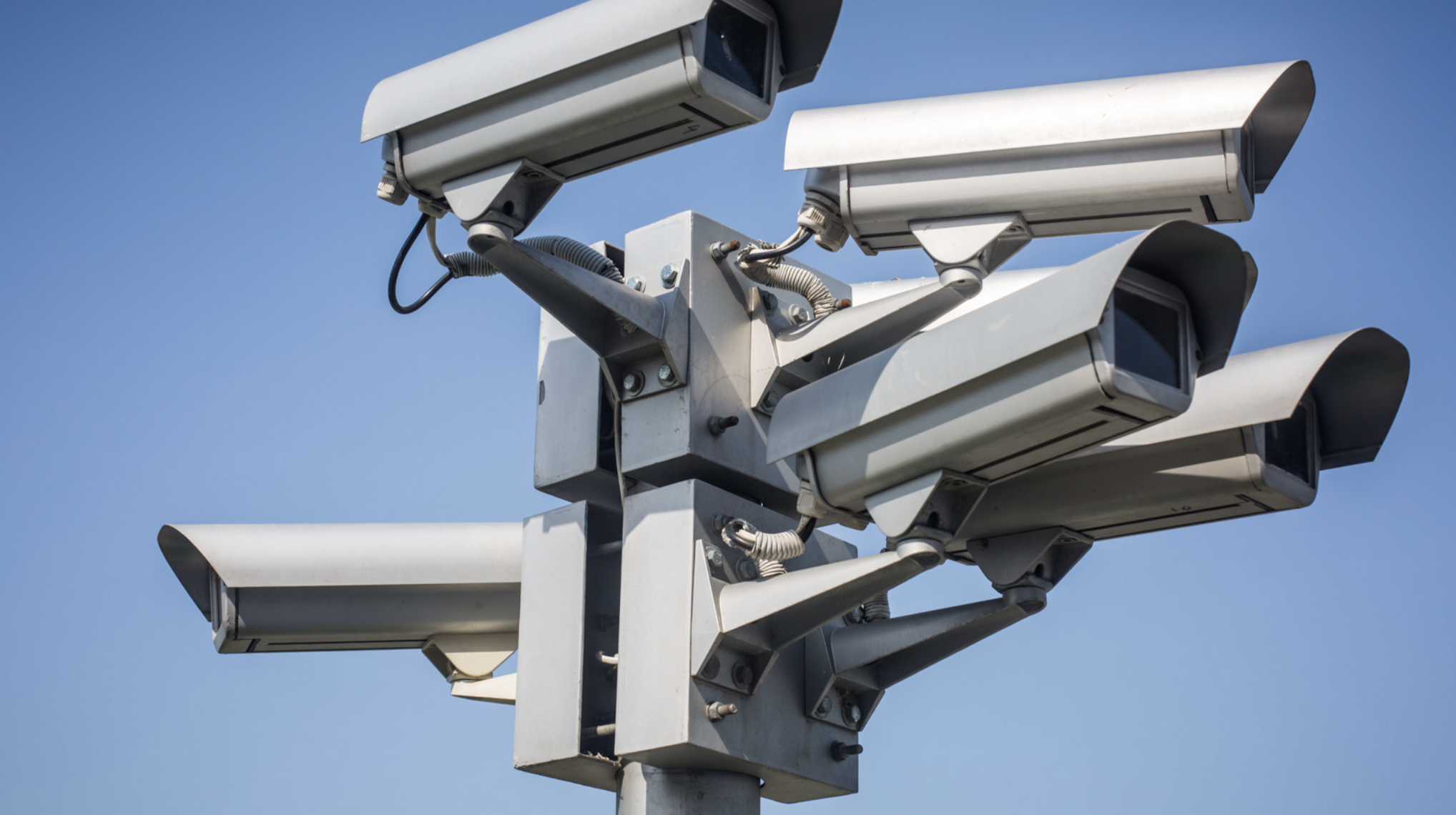
You walk into a store and something shifts in your body before your mind catches up. A subtle alertness. An awareness of who is watching, where the exits are, how much space you are taking up. You might have learned to call it anxiety. You might have be calling it paranoia. Your ancestors would have called it knowledge. Intergenerational hypervigilance among BIPOC communities is how many stayed safe.
It is information, encoded across generations, about what it has historically cost to be seen, to be known, to be monitored by systems that did not wish you well. Understanding where that information came from, and what it has protected, is not just an academic exercise. It is the beginning of relating to your own body with a different kind of respect.
Canada Has a Documented History of Surveilling Indigneous Racialized Bodies
In April 2026, newly declassified RCMP files confirmed what many Indigenous communities already knew: the Canadian government ran a coordinated surveillance operation against its own First Nations people.
Through an investigation led by CBC Indigenous, the declassified files confirm the operation of a surveillance program run by the RCMP that they called the Native Extremism Program which involved wiretaps, paid informants, covert operatives, and surveillance at homes, offices, airports and bars of legitimate First Nations advocacy organizations. The files also confirm that the Liberal government in the mid-1970s approved covert RCMP wiretaps and other methods to monitor the telephones of the National Indian Brotherhood, known today as the Assembly of First Nations.
The documents are imbued with racist and paternalistic language of the era, stamped with words like “Racial Intelligence” and “Native Extremism.” As CBC News noted, this is not ancient history but living memory, of consequence today.
And Indigenous Peoples Were Not the Only Ones
The surveillance of Indigenous peoples by the Canadian state is not a closed chapter. It is a continuous one, expressed through different technologies and different justifications across different eras. The Japanese Canadian internment during World War II included systematic surveillance and registration of an entire community. The No. 2 Construction Battalion emerged during World War I specifically because white regiments were turning away Black Canadian men — the Battalion itself functioned as a form of surveillance and segregation. Chinese Canadians lived under the Chinese Exclusion Act from 1923 to 1947, during which time authorities monitored and controlled their movements, associations, and activities. South Asian communities, Caribbean communities, and Muslim communities have all experienced state surveillance in Canada in forms that have shifted across decades but never fully disappeared.
This is the history that lives in bodies. This is not abstract knowledge, it is embodied knowledge, carried forward through families who learned, over generations, that being watched by authority was a matter of survival.
Sources: BC Assembly of First Nations, April 2026; CBC News, March 2026; Gord Downie and Chanie Wenjack Fund, April 2026
What the Research Says About Intergenerational Vigilance
For a long time, mainstream mental health frameworks treated the hypervigilance that BIPOC people carry as a symptom to manage, an anxiety disorder to treat, a stress response to regulate away. The emerging research tells a more complex and accurate story.
A 2026 review published in Frontiers in Psychiatry synthesizing studies from 1990 to 2025 found that trauma can contribute to lasting psychological, behavioral, and physiological effects that extend across generations. Proposed mechanisms involve interacting biological and psychosocial processes, including stress-responsive regulatory systems, epigenetic variation, and caregiving environments.
Put plainly: the vigilance your grandparents developed in response to real threats does not simply disappear when the threat changes form. Evidence suggests it gets encoded, biologically and behaviourally, and passed to the next generation – though researchers are still figuring out how.
Research on descendants of famine-associated genocides documented persistent “survivor mode” behaviours characterized by fear, hypervigilance, and adaptive caution across second and third generations, despite those descendants not directly experiencing the original trauma. The persistence of these behavioural patterns across generations may reflect stress-response and metabolic adaptation.
For BIPOC communities in Canada, this means that the body’s alertness in the presence of authority, in public spaces, in institutional settings, is not irrational. It is a form of inherited intelligence. Your nervous system learned from generations of ancestors who needed to be alert in order to survive contact with systems that had the power to harm them. That learning did not disappear simply because the overt forms of surveillance shifted.
Source: Frontiers in Psychiatry, March 2026. doi: 10.3389/fpsyt.2026.1769422
Three Ways Intergenerational Vigilance Shows Up
Understanding that hypervigilance has intergenerational roots helps make sense of responses that might otherwise feel confusing or disproportionate. Here are three of the most common patterns:
- Resistance. Some BIPOC people and communities respond to surveillance and authority with active resistance. Advocacy. Organizing. A refusal to be made compliant. This is often the pattern in communities with strong traditions of political resistance, where the knowledge of surveillance has been named, analyzed, and turned into a source of collective power. The resistance is not just reaction; it is inherited strategy.
- Apathy or withdrawal. Other people respond with a kind of protective disengagement. Not trusting institutions. Not reporting harm because reporting requires contact with the systems that have historically caused harm. Staying below the radar by choice, because visibility has historically come with cost. This pattern is often misread by mainstream frameworks as passivity or hopelessness. It is frequently neither. It is strategic invisibility, a survival logic that made sense in contexts where drawing attention was dangerous.
- Over compliance. A third pattern involves over-compliance: working harder, achieving more, performing model minority status, trying to become so useful and so unimpeachable that the surveillance cannot find a foothold. This pattern often shows up in high-achieving BIPOC people who cannot rest, cannot be seen to fail, and carry a low-level terror of being found inadequate. As explored in BIPOC Burnout and Impostor Syndrome, this is one of the most exhausting and least acknowledged forms of intergenerational harm.
None of these patterns is a defect. All of them are intelligences that developed in response to real conditions. Understanding them as such is the starting point for something different.
The Body Keeps the History
Epigenetics studies how experiences shape gene expression, how what happens to a body changes how that body’s genes are read, and how those changes travel to subsequent generations without altering the underlying DNA sequence.
Research on epigenetic inheritance confirms that trauma does not cause permanent changes to genetics, but can powerfully impact the regulation of stress-related genes, with enduring effects on offspring. Studies of Holocaust survivors, residential school survivors, enslaved communities in North America, and refugee communities all document measurable shifts in how bodies regulate stress responses across generations.
The hypervigilance you carry is not imagined, not weakness, not pathology. It is the body responding to a history it carries in its very cells.
What this also means is that healing is possible not just through understanding, but through embodied experience. The nervous system that learned vigilance through generations of exposure to threat can also learn safety through generations of genuine safety. Intergenerational trauma often causes the nervous system to chronically shift from a calm and grounded state to a state of hypervigilance and tension. Regaining a sense of connectedness to that resilience of past generations can come through spirituality, community, and learning about lineage. Finding space for collective healing in community can be a powerful antidote and strong coping tool.
Sources: Frontiers in Psychiatry, 2026; mytherapynyc.com, 2024
What This Means for Mental Health Support
A therapist who does not understand the history of surveillance on racialized bodies in Canada will misread what you bring into the room. Hypervigilance becomes an anxiety diagnosis. Protective withdrawal becomes avoidance. Exhaustion from constant performance becomes burnout, without anyone asking what is underneath it.
A therapist who holds this history, who understands that your body’s responses are not symptoms but intelligences, who can help you develop a different relationship with the vigilance you carry without asking you to abandon it entirely: that therapist changes what therapy can offer.
Working with intergenerational vigilance in therapy does not mean trying to become someone who no longer notices when a room is unsafe. It means developing the capacity to differentiate between genuine threat and historical echo, to hold your body’s wisdom without being governed by it, and to build the internal resources to choose your response rather than react from inherited fear alone.
This is slow, careful, respectful work. It requires a therapist who already understands what you are carrying, and why.
Ready to find a therapist in Vancouver who holds this history? Browse culturally responsive, anti-oppressive BIPOC therapists in Vancouver
The Wisdom Is Worth Keeping
The vigilance your ancestors developed did not come from nowhere. It came from accurate perception of real conditions over generations, it kept people alive, it kept communities intact, and it carried families through eras of documented, systematic harm.
That vigilance deserves respect, not erasure. The work of therapy, of healing, of building something different, is not about becoming someone who no longer carries this history. It is about relating to what you carry with more choice, more understanding, and more support than previous generations had access to.
Your body already knew things. The work is to understand what it knows, and why, and to build from there.
We are here. Find a therapist who already understands the history
Additional Resources
Browse BIPOC therapists in Vancouver and the Lower Mainland
Related Reading
- What Is Intergenerational Trauma? And How It Shows Up in Immigrant Families
- BIPOC Burnout and Impostor Syndrome: When Success Doesn’t Feel Like Enough
- Understanding the Nervous System and Why It Matters for BIPOC Healing
- When Therapy Causes Harm: Microaggressions in the Therapy Room
- The Model Minority Myth and Mental Health: What It Actually Costs
Not ready for therapy yet?
- Explore our Resources page for community organizations and mental health tools
- Follow us on Instagram for culturally sensitive mental health content
- Join our newsletter for monthly BIPOC mental health resources
About Healing in Colour
Healing in Colour connects BIPOC clients across Canada with therapists and allied professionals who practice from anti-oppressive values. We believe BIPOC people, in all our intersections, deserve therapy that supports our healing and liberation.
Learn more: About Us | Our Statement of Values
If you are in crisis, please reach out to Talk Suicide Canada: 1-833-456-4566 (24/7) or call or text 9-8-8 anytime. Hope for Wellness Help Line for Indigenous peoples: 1-855-242-3310.