Have you heard the term “nervous system” thrown around a lot these days? With access to so much more information about mental health and the body’s response to stress and trauma, you may have come across this term. But what does it actually mean? And more importantly, does understanding the nervous system matter when working with Black, Indigenous, and people of colour? Let’s break it down.
What Is the Nervous System?
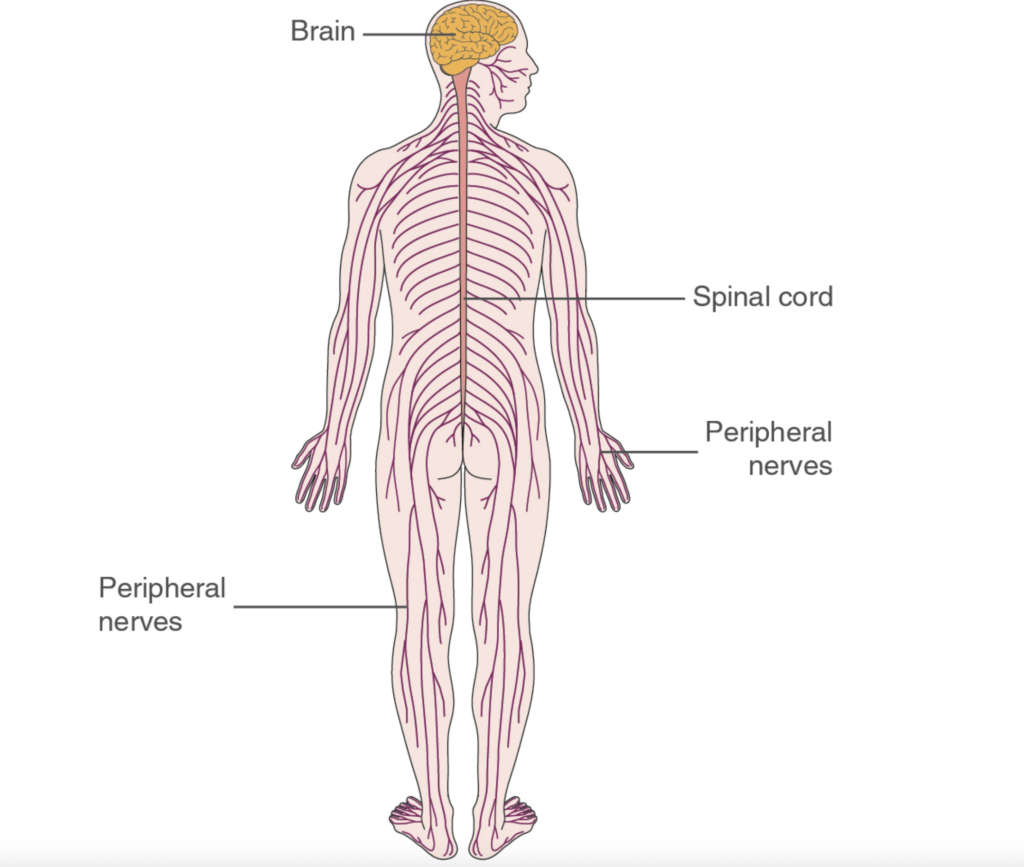
The nervous system is the body’s communication network. It draws on three important components:
•The brain (the control center)
•The spinal cord (the main highway)
•Nerves (the messengers)
It plays an important role in controlling our:
•Reflexes
•Emotions
·Movement
·Memory & thinking
The nervous system is a major player in:
•How we think, move, feel, and heal
•It plays a role in stress, pain, memory, and emotions
•As a result, knowing this can help us protect our health – especially in racialized communities.
Why does understanding the nervous system matter for BIPOC Healing?
The nervous system is constantly scanning for cues in our environment. Its primary role and focus is to scan for safety and to help our body adjust its response based on that information. In fact, it scans not only for obvious signs of danger such as physical threat, but also for subtle cues: tone of voice, facial expressions, whether we feel belonging or inclusion, and whether there is space to rest or whether we should stay vigilant. Our experiences, intergenerational legacies, environment, and the conditions we have endured all shape these responses – none of them are objective.
Understanding the nervous system can help Black, Indigenous & People of Colour (BIPOC) individuals put language to something their bodies already know.
For a long time, especially within Western mental health frameworks, practitioners and institutions have framed stress, trauma, and healing as individual issues. If you feel anxious, overwhelmed, constantly scared, or exhausted, the focus has landed on what you need to change. However, when we bring in an understanding of the nervous system alongside research-backed studies from neuroscience, it becomes clearer that our bodies respond to historical conditions – not personal or moral failures.
What does this look like for BIPOC communities specifically?
For many BIPOC people, those conditions include not only everyday life stressors, but also ongoing experiences of racism, microaggressions, cultural erasure, and, at times, inter-generational trauma. That means the nervous system isn’t just reacting to isolated moments – it may be responding to patterns that repeat, persist, and cause very real harm. So if someone feels constantly on edge, hypervigilant, exhausted, easily irritated or quick to shut down, it’s not useful or even accurate to treat that as a personal flaw. It can signal a nervous system that learned to stay alert in environments where safety was never guaranteed. Naming that really matters. Because without that context and understanding, people often internalize harmful messages: that they’re “too much,” “not resilient enough,” or somehow broken. And those messages can reaffirm wider societal messages systems of oppression have communicated to BIPOC individuals in more explicit ways.
The biology of the Nervous System (simplified)
The Nervous system can be organized ( in simple terms) as two major components. The Sympathetic Nervous System and the Parasympathetic Nervous System.
The Sympathetic Nervous System kicks in during stress or danger. It helps you survive by getting your body ready to fight or run. Think of your body’s response to danger such as fight-flight-freeze-fawn response in moments of perceived danger. Sound familiar?
You might notice it as:
- your heart beating faster
- your breathing getting quicker or shallower
- your muscles tightening, ready to move
- a burst of energy, alertness, or even anxiety
- feeling on edge, irritable, or hyper-aware of your surroundings
The Parasympathetic Nervous System helps you calm down and recover. It brings your body back to balance after stress. It helps your body go back to the state of rest and digest which is needed for slowing down, restoring and nourishing ourselves.
In this state, things in your body begin to shift towards a grounded state:
- Your breathing slows and deepens
- Your heart rate steadies
- Digestion becomes easier (your body can actually process food again)
- Muscles release some of their tension
- You might feel more present, more grounded, or even a little sleepy
Sympathetic Nervous System Baseline & Chronic Stress
Our bodies are wired to handle some amount of short-term stress. We have the same capacity to “shake off” small periods of stress. But our bodies were never meant to handle long-term otherwise known as chronic stress. When your baseline is stuck in the sympathetic nervous system, stress stops being a moment and starts to feel like a constant & chronic experience. It becomes an unsustainable way of being over time, not because your body is doing something inherently wrong, but because through experiences, it has learned and been asked to stay on the lookout for potential danger.
For many BIPOC people, that “always on” feeling definitely doesn’t come out of nowhere. It is shaped by navigating environments where you have to read the room, stay aware, or prepare for harm whether that harm is subtle or overt. Your nervous system learns to stay ready.
If you’re curious, frameworks like Polyvagal Theory, Somatic Experiencing, Interpersonal Neurobiology, or in part Attachment Theory try to put language to this by describing how our bodies shift between states of connection, mobilization ( staying ready), and shutdown ( a form of collapse) depending on our surroundings and our sense of safety.
What does it mean for our Healing?
Understanding trauma and the nervous system is a pivotal part of our healing journey. For BIPOC people, especially those who’ve lived through trauma or ongoing stress, the nervous system learns to stay on high alert. And if your body has experienced marginalization, racism, ableism, poverty, or other forms of harm sometimes even inter-generationally, your nervous system may be responding not just to that isolated events, but to patterns that are real and ongoing. And understanding that really matters.
Because when we ignore that context, it becomes easy to pathologize people instead of understanding them. It becomes easy to say “this is a disorder” instead of asking “what happened?” or “what is your body trying to do for you?”. A more compassionate approach recognizes that nervous system responses are adaptive. They are creative, protective, and often incredibly intelligent. Even responses that feel frustrating, draining or overwhelming, like anxiety, numbness, or irritability, can be understood as strategies your body developed to get through something. It is really important to name on our collective journey towards healing that trauma lives in the body and not just as a memory or emotion, but as real sensations, reflexes, and survival patterns.
Healing is possible – and it happens in the body
When we’ve been hurt, especially over time, our bodies and nervous systems adapt to help us survive. These responses are not signs of weakness, they are signs of resilience. But the powerful truth is this: healing is possible.
Our brains and nervous systems are neuroplastic, which means they can change, rewire, and grow across our entire lifetime.
Just as trauma shapes us, healing experiences , like safety, connection, boundaries, rest, and compassion reshape us too.
Every time we breathe deeply, show ourselves kindness, feel seen without judgment, or reconnect to our body in a safe way, we’re not just “coping” we’re re‑wiring. Healing doesn’t mean forgetting or pretending nothing happened. It means reclaiming choice, softness, joy, and aliveness, little by little, moment by moment. So if you’ve ever felt broken or stuck, we want you to know: you are not broken, you are human and healing. And that healing can happen in real, physical, embodied ways. Reach out to one of our listed counsellors if you’re looking for an ally on your healing journey.
Additional Resources
Find an anti-oppressive BIPOC therapist in Canada that understands trauma and the nervous system in BIPOC communities.
- Find a therapist on our Therapist Directory
Related Reading
- Intergenerational Trauma in Immigrant Families
- What is Anti-Oppressive Therapy? (And Why it Matters for BIPOC Healing)
Not ready for therapy yet?
- Explore our Resources page for community organizations and mental health tools
- Follow us on Instagram for mental health content
- Join our newsletter for monthly tips with mental health resources
About Healing in Colour
Healing in Colour connects BIPOC clients across Canada with therapists and allied professionals who practice from anti-oppressive values. We envision a world where BIPOC, in all our intersections, have access to therapy that supports our healing and liberation.
Learn more: About Us |Our Statement of Values
If you are in crisis, please reach out to Crisis Services Canada: 1-833-456-4566 or visit crisisservicescanada.ca