
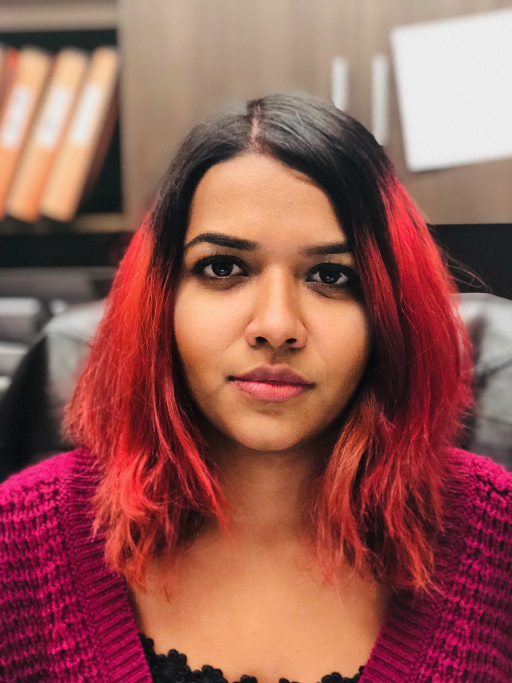
I’m a Registered Social Worker, trauma counsellor, ADHD and academic coach, and UBC-affiliated social science researcher.
WHO I WORK WITH
I provide individual and family counselling, as well as ADHD and educational coaching, in person in Vancouver and virtually across BC and Ontario.
I work with kids/youth, adults, and families with:
-Single-incident and complex trauma/PTSD
-ADHD, learning differences (e.g., NVLD, autism, dyslexia)
-Migration experiences (e.g., refugees, immigrants, international students)
-Complex cultural identities, including mixed-race, immigrant, diasporic, and Third Culture (TCK/TCA) backgrounds.
I have a decade of experience working with these populations.
MY BACKGROUND
As a mixed-race Third Culture Kid with ADHD who immigrated to Canada alone at 16, I know what it feels like to constantly move between worlds, identities, languages, expectations, and versions of yourself. I know what it’s like to feel “too much,” misunderstood, emotionally intense, chronically behind, or like you’ve spent your entire life trying to translate yourself to other people.
I have mixed South Asian and Latin American heritage, and I speak English, Hindi, Spanish, Sinhala, and Portuguese. I have significant personal experience living, learning, and teaching in Southern African, South American, and South Asian contexts. I grew up internationally in a diplomatic family and have lived in Sweden, Turkmenistan, India, Sri Lanka, Mexico, Croatia, Zimbabwe, Zambia, Canada, the United States, Australia, and Brazil.
WHAT MY CLIENTS ARE LIKE
Many mixed-race, immigrant, and multicultural people carry forms of grief, shame, and fragmentation that mainstream mental health conversations rarely understand. This can look like feeling disconnected from all your cultures, experiencing racism from your own communities, code-switching so often that you no longer know what feels “real,” hiding parts of yourself to survive Western norms, and/or carrying intense pressure to become “successful enough” to justify your family’s sacrifices.
Similarly, ADHD and other neurodivergence often looks very different in racialized and multicultural communities. Many of the individuals I work with were labelled “lazy,” “dramatic,” “weird,” “too much,” “disrespectful,” or “gifted but inconsistent” for years while their actual struggles went unrecognized. You might not even have known what ADHD was because it “doesn’t happen in your culture”. Once you discovered and understood your ADHD, perhaps you still felt like an outsider in mainstream, Western disability conversations that didn’t consider culture or diasporic trauma. Families I’ve worked with describe themselves as a space where everyone was overwhelmed, emotionally reactive, chronically late, masking, or struggling in different ways, but, despite the love being there, survival, migration, stigma, and both traditional and Western cultural expectations left little room to name and understand what was actually happening.
For many people of color with ADHD (and other disabilities), there is a “double whammy” of struggle. Both their brains but also their cultural ways of relating to time, productivity, family, emotion, or community are often judged against rigid Western expectations around independence, efficiency, and “normal” functioning, creating a deep sense of being “wrong” in multiple ways at once.
MY WORLDVIEW AND APPROACH
A lot of my work centers around helping people make sense of themselves beyond the boxes they’ve been placed in. I do not see ADHD traits, cultural practices, or emotional intensity as “symptoms” to “manage”, but as meaningful ways of thinking, relating, and experiencing the world that are often shaped by years of misunderstanding, shame, and trying to function within systems that were never designed with them in mind. My goal is to help clients better understand themselves, reduce shame, reconnect with parts of themselves that may have been pushed aside, and actually realize they deserve care that sees all the parts of them as worthy, interesting, and unique.
I am trained in EMDR, Lifespan Integration, and Interpersonal Psychotherapy (IPT), with additional training in CBT, Narrative Therapy, DBT Skills Training, Emotionally Focused Therapy (EFIT/EFFT), play therapy, executive functioning support, the Orton-Gillingham approach, the ADHD Inside Out framework, critical disability frameworks, and two-eyed seeing. My work is also informed by the ADHD and psychosocial research I conduct through the University of British Columbia.
With particular relation to ADHD and complex cultural identity, topics I can help with include:
-Single-incident and complex trauma
-Shame, guilt, perfectionism, and chronic self-criticism
-Time perception, dissociation, and life interruptions/transitions
-Identity-related concerns and masking
-Emotional responses and regulation (e.g., anxiety, low mood, anger, impulsivity)
-Executive functioning and motivation
-Academic/workplace difficulties and burnout
-Parenting, family, and relational stress
-Therapeutic, recreational, and problematic substance use (cannabis, nicotine, psychedelics)
-Chronic pain, illness, and injury
Trauma and chronic misunderstanding do not just affect emotions; they can deeply impact learning, motivation, confidence, time management, school, work, and daily functioning. Therefore, sessions can include both therapy (e.g., trauma processing, emotional regulation, identity work, relationship patterns) and coaching/support (e.g., executive functioning, reading support for dyslexia, study strategies, job search support, routines, and time management skill development).
In our first session, we’ll take a high-level look at all the parts of your (or your child’s/family’s) life and create a roadmap for understanding what’s going on, where to start, and how to build a life that actually works for you.
If any of the above sounds of interest in any way, please feel most welcome to go ahead and book a free 20-min video or phone consultation on my Jane page (link below). At the very least, I can promise you a worthwhile conversation.
HELPFUL LINKS
For more information about me and my practice, please visit:
1. Jane (booking, availability, and session information): https://scatteredsouls.janeapp.com
2. Psychology Today (insurance and extended health information): https://www.psychologytoday.com/ca/therapists/ramona-himayini-sharma-vancouver-bc/1739522
3. My website: https://www.scatteredsouls.ca
4. Google Scholar (research): https://scholar.google.com/citations?user=S6pfghkAAAAJ&hl=en