Healing Resistance by Kazu Haga
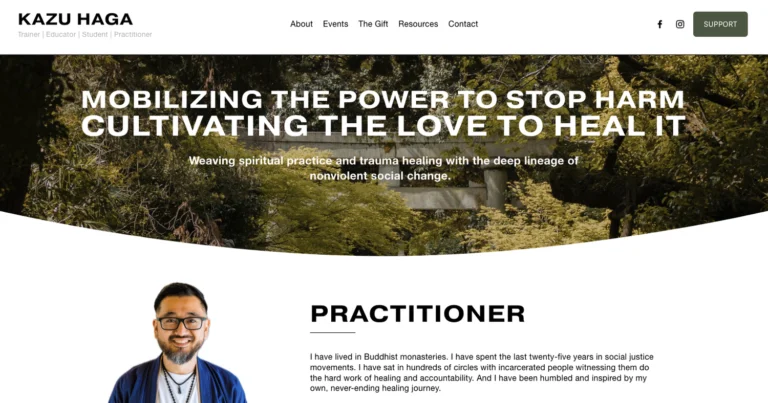
Kazu Haga, in “Healing Resistance,” offers a mindfulness-based approach to nonviolent action, demonstrating how nonviolence is a powerful tool for personal and social transformation.
Category:
Read more
Rage Becomes Her By Soraya Chemany
Soraya Chemany, in “Rage Becomes Her,” writes a transformative book urging twenty-first century-women to embrace their anger and harness it as a tool for lasting personal and societal change.
Category:
Read more
The Pretty One By Keah Brown
Keah Brown, in “The Pretty One,” shares a collection for the people who give a damn, for the girl who saw her differences as dangerous and ugly, who lived most of her life trying desperately to wish herself into another
Category:
Read more
The Collected Schizophrenias By Esme Weijun Wang
Esme Weijun Wang, in “Collected Schizophrenias,” explores life with schizophrenia and schizoaffective disorder, blending personal narrative with her analytical background as a former Stanford lab researcher.
Category:
Read more
The Body Is Not An Apology By Sonya Renee Taylor
Sonya Renee Taylor, in “The Body Is Not an Apology”, introduces radical self-love as a powerful force to heal the personal and societal wounds of body shame, arguing that every body is inherently worthy and deserves to exist without apology.
Category:
Read more
Set Boundaries, Find Peace By Nedra Glover Tawab
Nedra Glover Tawab, in “Set Boundaries, Find Peace,” explains that healthy boundaries are essential for self-care and fulfilling relationships by teaching readers to identify, establish, and maintain them in family, romantic, and work contexts.
Category:
Read more
Care Work By Leah Lakshmi Piepzna-Samarasinha
Leah Lakshmi Piepzna-Samarasinha, in “Care Work: Dreaming Disability Justice,” offers a collection of essays that explore disability justice as a radical act of collective care and love, offering a practical toolkit for building sustainable communities by and for sick and
Category:
Read moreMy Grandmother’s Hands By Resmaa Menakem
Resmaa Menakem, in “My Grandmother’s Hands,” explains how racial trauma affects the body and can be passed down through generations, arguing that white supremacy is embedded in the nervous system and requires body-centered healing for collective repair.
Category:
Read more