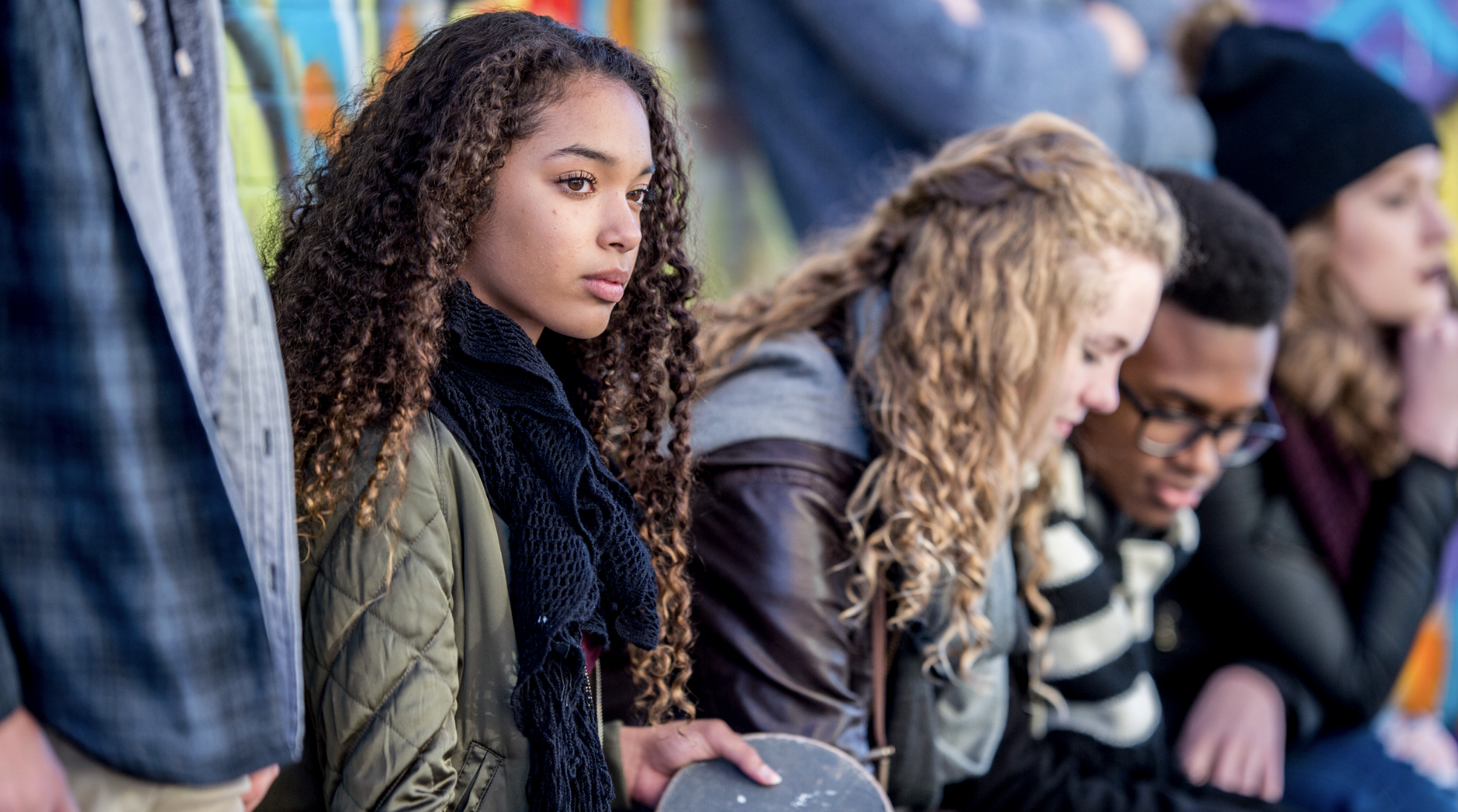
Your child came home from school quieter than usual. Maybe it has been happening for weeks. Maybe you have noticed them pulling back – from friends, from things they used to love, from you. You ask if they are okay. They say they are fine.
You are not sure you believe them. And you are not sure what to do with that uncertainty.
If you are a BIPOC parent watching your child struggle and wondering whether what you are seeing is serious – wondering whether to push, to wait, to find help, to ask more questions – this post is for you. Not to alarm you. To give you the actual picture of what is happening for BIPOC youth in Canada right now, so you can make informed decisions about the support your child needs.
The Numbers Are Serious – And They Are Not Being Talked About Enough
Youth mental health in Canada has been deteriorating for over a decade. The scale of that deterioration is striking.
A population-based study published in Social Psychiatry and Psychiatric Epidemiology (McKinnon, Jahan & Mazza, 2025), analyzing data from 96,683 young people aged 15 to 24 who participated in the nationally representative Canadian Community Health Survey between 2007 and 2022, found that the percentage of youth reporting poor or fair self-rated mental health quadrupled – from 4.3% in 2007-08 to 20.1% in 2021-22.
One in five young people in Canada now rates their own mental health as poor or fair. That number was one in twenty-five fifteen years ago.
For BIPOC youth, the picture is more urgent still.
The same study found that absolute inequalities in mental health outcomes widened significantly during this period for Indigenous youth compared to non-racialized youth – a gap of 11.4 percentage points. The Canadian Mental Health Association’s State of Mental Health in Canada Report (2024) confirms that distress runs higher among Indigenous and racialized populations across the country, with disparities concentrated in under-resourced communities.
Rates of generalized anxiety disorder tripled and rates of major depression doubled among youth aged 15 to 24 over the past decade (Stephenson E (2023), Statistics Canada, cited in McKinnon, Jahan & Mazza (2025)) and these numbers do not yet fully account for the compounding effects of racial discrimination, intergenerational trauma, immigration stress, and the specific experiences of BIPOC as a marginalized comunity in Canada.
Sources: McKinnon, Jahan & Mazza (2025), Social Psychiatry and Psychiatric Epidemiology, doi: 10.1007/s00127-025-02813-7; CMHA State of Mental Health in Canada 2024; MHRC A Generation at Risk 2024
What the Numbers Don’t Capture
Statistics give us scale. They do not give us texture.
For BIPOC youth in Canada, the mental health picture includes specific experiences that aggregate numbers rarely name. Code-switching – the exhausting labour of adjusting language, behaviour, and presentation depending on which cultural context you are moving through – begins in childhood and compounds over time. Racial discrimination in schools, in friendships, in online spaces, and in institutions shapes how BIPOC young people understand their own worth and belonging.
Many BIPOC youth also carry family weight that their non-immigrant peers do not. The expectations that come with being the child of people who sacrificed everything to build a different life. The pressure to perform success as evidence that the sacrifice was worth it. The grief of watching parents navigate systems that undervalue them – and the helplessness of not being able to fix it.
Add to this the specific weight of the current moment: a global political climate in which immigration enforcement, climate crisis, anti-Black violence, and anti-Indigenous racism are constant background noise for communities whose children are watching and absorbing all of it.
Your child’s mental health does not exist in a vacuum. It exists in a context – and that context matters enormously for understanding what they need.
Why BIPOC Youth Are Less Likely to Get Support
Knowing a child is struggling and knowing how to help are two very different things. For many BIPOC families, the gap between the two is wide – and it is not the family’s fault.
Several barriers compound for BIPOC youth specifically:
- The shortage of culturally responsive practitioners. Finding a therapist or counsellor who already understands the cultural context of your child’s life – who does not need your child to explain that racism exists, or why family obligation feels heavy, or why belonging has always been complicated – is genuinely difficult. The field has not produced enough BIPOC practitioners to meet the existing need, let alone the growing one.
- Cost. Private therapy in most Canadian provinces runs between $150 and $250 per session and sits outside universal healthcare coverage. For families already navigating financial precarity – which BIPOC families face at disproportionate rates – that cost is a real barrier.
- Stigma within communities. Many BIPOC communities carry cultural frameworks around mental health that were shaped by necessity – by survival, by the imperative to keep going regardless of what you are carrying. Naming struggle can feel like weakness, like ingratitude, or like a betrayal of community values. Young people absorb these messages and learn not to ask for help.
- Systems that pathologize rather than understand. School-based mental health supports and publicly funded services often operate from Western, individualist frameworks that misread BIPOC young people’s experiences. A child who is hypervigilant because of racial discrimination may be diagnosed with anxiety. A child who is quiet and withdrawn because of family stress and cultural pressure may be dismissed as fine. The framework shapes what gets seen – and what does not.
What Culturally Responsive Support for BIPOC Youth Actually Looks Like
Effective mental health support for BIPOC youth does not require your child to leave their cultural context at the door. It starts from within it.
A culturally responsive practitioner working with a BIPOC young person understands that the family is not background information – it is central. That the pressure your child feels is not irrational – it is the rational response to real and specific conditions. That healing does not mean becoming more individualist, more detached from community, or more comfortable in dominant culture. It means building the internal resources to navigate all of those things without losing themselves.
Practically, this looks like:
- A practitioner who names systemic harm without requiring the young person to educate them. Your child should not spend their sessions explaining why racism affects their mental health. That should already be understood.
- Approaches that honour collective values. Family therapy, community-oriented frameworks, and cultural grounding – rather than exclusively individualist models – serve BIPOC youth more effectively.
- Language access where relevant. For youth who move between languages at home, working with a practitioner who speaks their family’s language can remove a significant barrier to depth.
- Sliding scale options. Cost should not determine whether your child gets help. Many culturally responsive practitioners offer sliding scale fees specifically because they understand who they are serving.
As a Parent, What Can You Do Right Now
You do not have to have all the answers before you start. Here are some concrete first steps:
- Name what you are seeing, without diagnosis. You do not need to know whether what your child is experiencing is depression, anxiety, or something else. You need to name what you are observing – the withdrawal, the irritability, the sleep changes, the loss of interest – and open a conversation from that specific place rather than from a general worry.
- Normalize help-seeking in your own language. If your cultural framework makes therapy feel foreign, you can introduce the idea through the language that fits your family’s values – as support for managing pressure, as a space to think, as something that helps you do your best. You do not have to call it therapy if that word carries weight.
- Start the search before the crisis. Finding a culturally responsive practitioner takes time. Starting the search before things become urgent means your child is not waiting at their most vulnerable moment.
Ready to find support for your child? Browse BIPOC therapists and practitioners across Canada who work with youth and families
The Back to School Season Is a Pressure Point
September brings a specific kind of weight for BIPOC youth. New classrooms, new social dynamics, the return of academic pressure, and the re-entry into spaces where belonging is not guaranteed. For many BIPOC young people, the weeks before and after the school year begins are among the most psychologically demanding of the year.
If your child is showing signs of struggle as September approaches – increased anxiety, irritability, resistance to going back, changes in sleep or appetite – that timing is not coincidental. And it is a signal worth responding to now, before the school year is fully underway.
Your Child Deserves Support That Sees Them Fully
The numbers are serious. The barriers are real. And neither of those facts means your child has to navigate this alone, or that you have to figure it out without support.
Healing in Colour’s directory connects BIPOC families across Canada with practitioners who understand the full context of your child’s life – not just the symptoms, but the systems, the family, the culture, the moment. Practitioners who will not ask your child to simplify themselves before the support can begin.
We are here when you are ready.
Find a culturally responsive therapist for your child or family
Additional Resources
Browse BIPOC therapists across Canada
Related Reading
- What Is Intergenerational Trauma? And How It Shows Up in Immigrant Families
- How to Talk to Immigrant Parents About Therapy
- Depression in Second-Generation Immigrants: Why You Feel Guilty for Struggling
- When Therapy Causes Harm: Microaggressions in the Therapy Room
- BIPOC Burnout and Impostor Syndrome
Not ready for therapy yet?
- Explore our Resources page for community organizations and mental health tools
- Follow us on Instagram for culturally sensitive mental health content
- Join our newsletter for monthly BIPOC mental health resources
About Healing in Colour
Healing in Colour connects BIPOC clients across Canada with therapists and allied professionals who practice from anti-oppressive values. We believe BIPOC people, in all our intersections, deserve therapy that supports our healing and liberation.
Learn more: About Us | Our Statement of Values
If you or your child is in crisis, please reach out to Crisis Services Canada: 1-833-456-4566 or visit crisisservicescanada.ca. Kids Help Phone is also available 24/7: 1-800-668-6868 or text CONNECT to 686868.