
There is a specific comfort that many immigrants carry without naming it. A kind of tether. The knowledge that “somewhere”back home” – the house still stands, the street still sounds the same, the market still holds the smells of the food your used to. The place you came from exists, even if only in pictures, phone calls, and in too short visits.
The tether was suddenly cut for many Southeast Asian and South Asian diaspora communities in Canada.
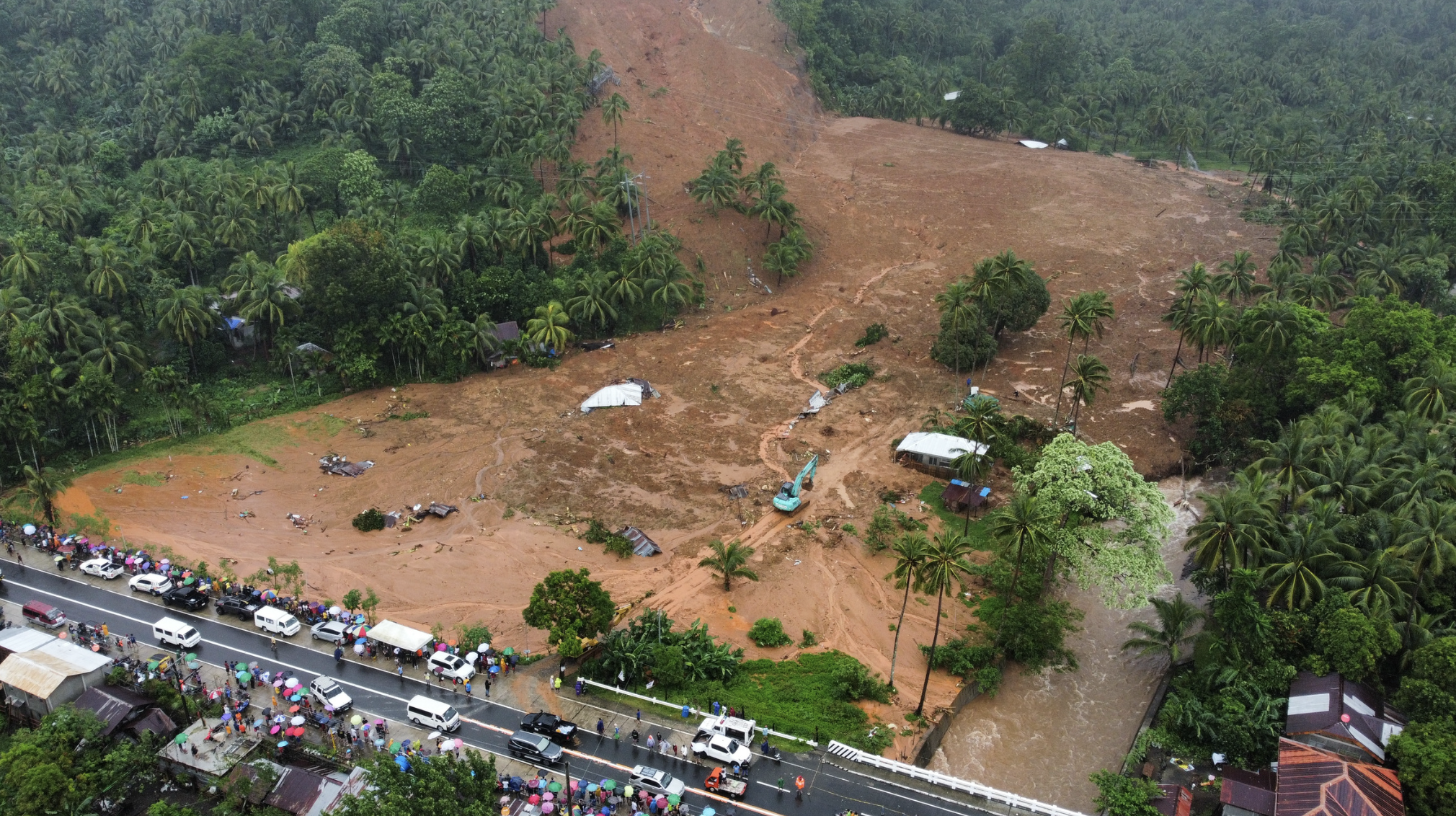
On June 8, 2026, a magnitude 7.8 earthquake struck Mindanao in the Philippines, triggering tsunamis that reached both the Philippines and Indonesia. In Vietnam, storms and floods have caused more than 400 deaths since 2025, with the country facing one of its harshest typhoon seasons in years. Flash floods in Nepal and along the Nepal-China border have been described as one of Asia’s deadliest natural disasters of 2026. Indonesia has faced ongoing floods and landslides across multiple provinces throughout the year. Thailand, Malaysia, and Myanmar have all recorded significant disaster events in 2026.
These are not abstract statistics for the Southeast Asian and South Asian diaspora living in Canada. They are places where family members still live. They are the villages, the streets, the rivers, the mountains that form the geography of memory. When those places are destroyed, altered beyond recognition, or made permanently unsafe, the grief that follows is layered, complicated, and shared.
How Diaspora Grief Shows Up
Researchers are beginning to document what diasporic communities have always known: that migration carries its own grief, separate from and layered on top of whatever grief prompted or forced the move.
A 2024 systematic review published in Frontiers in Psychiatry coined the term “migratory grief” to describe the complex, often unacknowledged losses that accompany immigration: the loss of language context, of social role, of landscape, of daily rituals, of the version of yourself that existed in your home country. This grief does not resolve because it is not pathological. It is the natural consequence of leaving.
What happens when a natural disaster, political upheaval, social transformation, or simply the passage of time alters the homeland so fundamentally that it no longer exists as the place you left? The grief shifts. It is no longer the grief of being away from somewhere that still waits for you. It becomes something closer to bereavement: the grief of a place, people, time, or familiarity that has disappeared.
A 2026 systematic review from the Society for Social Work and Research, examining grief experiences among Asian diaspora in North America, found that collectivist cultural values, the weight of family obligation, and the particular tension of grieving a homeland from a distance all shape how these communities experience grief. Participants described grief that Canadian institutions rarely held, that employers and healthcare providers rarely recognized, and that the communities around them rarely acknowledged as legitimate.
Sources: Renner, Schmidt and Kersting (2024). Migratory grief: a systematic review. Frontiers in Psychiatry 15:1303847. doi: 10.3389/fpsyt.2024.1303847; Society for Social Work and Research Annual Conference, January 2026. sswr.confex.com/sswr/2026/webprogram/Paper59645.html
When “Back Home” is Gone
The loss of a homeland takes different forms, and the grief that follows looks different depending on how the loss happened.
- When a disaster destroys the physical place. For Filipino, Vietnamese, Indonesian, and Nepali diaspora in Canada watching news footage of places they grew up in, the loss is visceral and immediate. The house is gone. The neighbourhood is gone. The geography of memory no longer corresponds to anything that exists.
- When the place still exists but is unrecognizable. Time passes. A city is modernized beyond recognition. A village disappears into development. The landscape of your childhood has been replaced by something that shares its coordinates but not its character. This grief is harder to name, because the place technically still exists. Nothing dramatic happened. And yet the thing you carried as home is gone.
- When political or social upheaval has changed who belongs there. Governments shift. Political violence reshapes communities. For diaspora communities whose home countries are experiencing political instability, this grief carries an additional dimension: not just “I cannot go back” but “the place I would go back to no longer includes people like me.”
- When you have been away long enough that you no longer fully recognize yourself there. Some diaspora people experience a version of this grief on visits home: the uncanny feeling of belonging and not belonging simultaneously, of having become more Westernized in ways that make the homeland feel foreign, of realizing that the home they carry in memory existed at a specific moment in time and no longer does.
Every one of these experiences deserves recognition. Not one of them is pathological. Each one is a genuine loss.
How Grief Shows Up Differently
One of the most important things to understand about diaspora grief is that it does not look the same in every person, every family, or every community. Grief shows up differently depending on how close someone was to the affected area, how much family remains there, how long they have been in Canada, and what their cultural framework for mourning actually permits.
- For those with family directly affected. Helplessness is the dominant experience. You are here, they are there, you cannot physically help, and the emotional weight of that distance is enormous. This grief often carries guilt alongside it: the specific guilt of having left, of being safe, of not being there.
- For those whose family left years ago. The grief may be more diffuse. The connection to the place is more conceptual, held in stories and photographs and the memory of visits. When disaster destroys that place, the grief is real but harder to justify to people who do not understand why it matters that a village you have not visited in thirty years no longer exists.
- For second-generation diaspora. The homeland may exist primarily as a constructed imaginary, assembled from family stories, food, language fragments, and photographs. When disaster alters or destroys that place, they grieve something they never fully had to begin with, a loss layered with the existing complexity of navigating identity between two worlds.
- For those watching local change alongside global disaster. Grief does not queue. Many diaspora communities in Canada simultaneously process natural disasters in their homelands, climate anxiety about what is happening here, political uncertainty about immigration and belonging, and the daily labour of navigating a society that nobody built for them. These griefs compound.
What Helps
Grief of this complexity does not respond well to the standard mental health toolkit of symptom management and coping strategies. What the research on diaspora grief and post-disaster mental health consistently points toward is community.
A 2025 paper published in PLOS Global Public Health confirmed that strengthening social cohesion and existing community networks particularly helps mitigate the mental health consequences of natural disasters. For diaspora communities, this means gathering, even virtually, with people who share the same geography of loss. It means having space to name what you have lost without anyone asking you to justify why it matters.
Ritual matters too. Many Southeast Asian and South Asian communities have specific practices around grief and mourning that mainstream Canadian mental health does not account for. Prayer. Ceremony. Food. Collective gathering. These are not supplementary supports. For many communities, they are the primary containers for grief, and a mental health practitioner who understands this holds the work differently than one who does not.
Naming the grief is itself therapeutic. Many diaspora people in Canada carry losses that society has never formally recognized: no funeral, no bereavement leave, no public acknowledgment. A therapist who can hold “I am grieving a place that disaster destroyed” or “I am grieving the version of home that no longer exists” as a legitimate and significant loss changes what therapy can offer.
Finding a Therapist Who Understands Diaspora Grief
This is someone who holds the specific weight of losing a homeland to disaster, political upheaval, or time, does not require you to translate your experience before the support can begin.
In Canada, finding that therapist means looking for specific things. Anti-oppressive and culturally responsive frameworks signal a practitioner who understands that your mental health exists within a global context, not just a personal one. Experience with immigrant and diaspora communities signals that the practitioner already knows what migratory grief is. Community- and family-oriented approaches signal that your grief will not be reduced to individual symptoms.
Healing in Colour connects diaspora communities across Canada with therapists and practitioners who hold this knowledge: people who understand that you can be grieving a place you left ten years ago as acutely as you grieve any other loss, and who already know that the homeland is not just geography. It is the self you were before you left.
Ready to find a therapist in Canada who holds this? Browse culturally responsive, anti-oppressive therapists across Canada
You Are Allowed to Grieve What You Have Lost
Diaspora grief is real whether or not it comes with a dramatic event, proximity to the disaster, or blood relatives directly affected. You are allowed to mourn the village your grandmother described, to grieve the river that does not exist anymore, to feel the weight of watching your homeland in the news from a country where no one around you quite understands why you cannot focus today.
We are here. Find a therapist who already understands
Additional Resources
Browse BIPOC therapists across Canada
Related Reading
- When the Homeland Hurts: Mental Health Support for Diaspora Communities in Crisis
- The Types of Unrecognized Grief We Carry in Our Bodies
- What Is Intergenerational Trauma? And How It Shows Up in Immigrant Families
- When Immigration Policy Becomes a Mental Health Crisis
- When Collective Chaos Translates to Chaos in Our Minds
- Therapy as Solidarity: Building Capacity to Hold the Polycrisis Together
Not ready for therapy yet?
- Explore our Resources page for community organizations and mental health tools
- Follow us on Instagram for culturally sensitive mental health content
- Join our newsletter for monthly BIPOC mental health resources
About Healing in Colour
Healing in Colour connects BIPOC clients across Canada with therapists and allied professionals who practice from anti-oppressive values. We believe BIPOC people, in all our intersections, deserve therapy that supports our healing and liberation.
Learn more: About Us | Our Statement of Values
If you are in crisis, please reach out to Talk Suicide Canada: 1-833-456-4566 (24/7) or call or text 9-8-8 anytime. Hope for Wellness Help Line for Indigenous peoples: 1-855-242-3310.