
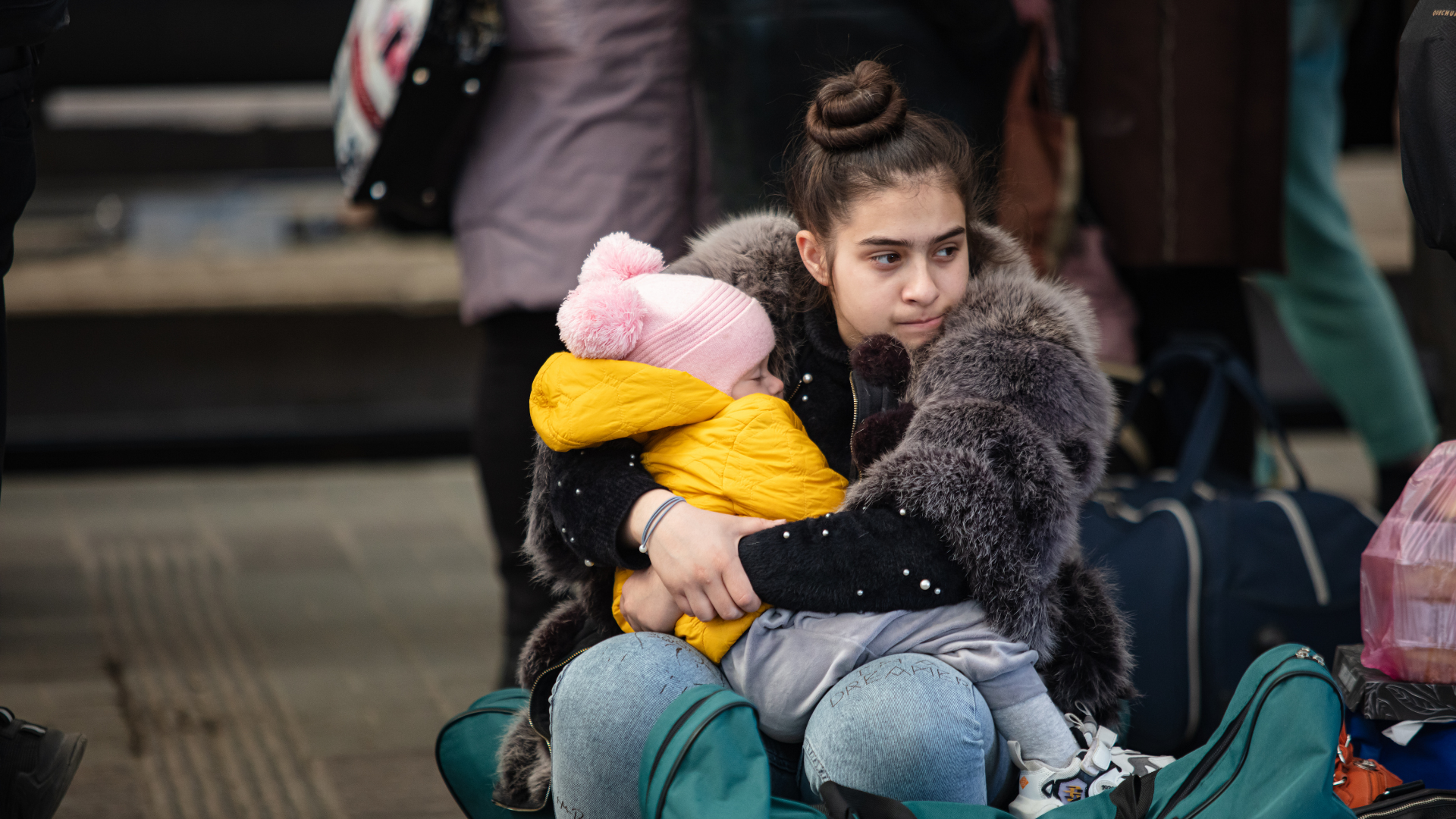
You are not in the United States. But the news reaches you anyway.
Maybe it arrives on your phone at 6am, maybe your mother calls, voice tight, asking if you’ve heard, maybe it’s in the family group chat – someone’s cousin, someone’s neighbour, someone two degrees of separation away – and suddenly the fear that felt distant is not distant at all.
In Toronto, in Brampton, in Scarborough, in Mississauga, in every community where immigrant families have built lives, the political climate south of the border is not an abstraction. It is arriving in bodies. In sleepless nights, a hypervigilance that doesn’t switch off when the news app closes, in conversations between parents and children that nobody wanted to have. Immigrant mental health, and the mental health of their families, and loved ones is something that needs to be looked at right now.
Some of us grew up hearing about “false positives”, disappearances, and extrajudicial actions taken by law enforcement. Either us or our parents had the opportunity to move north, perhaps settle in a place like Toronto, and feel relief that this was a thing of the past. But with what is happening in the US, a familiar fear and uncertainty might be rising up in us.
In this blog post we will focus on immigrant mental health but do not want to bypass that this experience is also being felt by Indigenous folks who are also seeing their kin in the US be erroneously targetted by anti-immigration legislation.
What Research Says about Immigrant Mental Health
In 2025, a large-scale survey conducted by KFF in partnership with the New York Times found that 4 in 10 immigrant adults, (including those with legal status, green cards, and citizenship), reported negative health impacts due to immigration-related fears. These included increased stress, anxiety, and depression; problems sleeping and eating; and worsening of existing physical health conditions.
Among likely undocumented immigrants, that number rose to nearly 8 in 10.
Critically, the fear crossed legal status lines. Among naturalized citizens, (people who completed every step of the formal process), worry about detention or deportation more than doubled between 2023 and 2025. Having papers did not make people feel safe. The policy environment itself had become the threat.
Research published in APA Monitor on Psychology (2025) and in The Lancet Regional Health — Americas documents what this chronic fear does to the body and mind: panic attacks, depression, anxiety, PTSD symptoms, somatic symptoms, disrupted sleep, and social withdrawal. People are afraid. And the fear is not irrational. It is a proportionate response to a real and documented threat.
Why This Crosses the Border
Canada is not the United States. Canadian immigration policy operates differently, and the legal protections available to immigrants here are not the same as those being dismantled south of the border.
But communities do not stop at borders. And trauma does not require citizenship.
In Toronto, home to one of the largest and most diverse immigrant populations in the world, many families span both countries. Parents in Brampton whose adult children work in the US on visas. Cousins in Scarborough watching family members in mixed-status households navigate daily fear. Community members in Mississauga following news of raids in cities that look like the ones they live in.
Research on vicarious trauma says that witnessing harm to people you are connected to, even at a distance, activates the same stress response systems as direct experience. When the community you belong to is under attack, your nervous system does not require you to be personally targeted to respond.
There is also a subtler harm happening in Canada itself. A 2025 national survey found that 54% of Canadians now believe immigration threatens traditional values, up from 38% five years ago. This shift in public sentiment is not invisible to the people it targets. Immigrant and racialized communities in Toronto feel it in comments, in hiring decisions, in the way certain conversations land. The political climate in the US does not stay contained to the US. It licenses attitudes that cross borders and settle into daily life.
What This Looks Like in the Body and in the Family
Immigration-related fear and trauma do not announce themselves with clean diagnostic labels. They arrive in patterns that can be easy to misread as something else.
- Hypervigilance that reads as anxiety. Constantly monitoring the news. Checking in on family members more than usual. A low-level alertness that never fully settles. This is not an anxiety disorder. It is an intelligent nervous system responding to a genuine threat landscape.
- Withdrawal that reads as depression. Avoiding public spaces. Hesitating to access services. Pulling back from community. The KFF survey found that 3 in 10 immigrants were avoiding travel, medical care, and workplaces due to fear, and that avoidance of healthcare specifically increased significantly between 2023 and 2025. Avoidance is a survival strategy. It also accumulates as isolation.
- Children carrying fear they weren’t given language for. Research published in Psychiatric News (2025) found that children in mixed-status families often live with chronic anticipatory anxiety, the constant background fear that a parent or family member could be taken. This fear shapes school engagement, emotional regulation, and attachment. Children do not need to understand immigration policy to feel its weight.
- Grief that doesn’t have a name. When the threat is ongoing and the loss is not yet concrete, grief has nowhere clean to land. It circulates as dread, as numbness, as the particular exhaustion of carrying something that has no resolution date.
- Compounded intergenerational load. For many BIPOC families in Toronto, this moment does not arrive on a blank slate. It arrives on top of displacement, colonial history, previous waves of anti-immigrant sentiment, and the accumulated weight of having built lives in a country that has not always welcomed you without condition. As explored in our post on intergenerational trauma, that inherited weight does not stay in the past. It shapes how the present lands.
The Secondary Wound: Having to Function Anyway
One of the most under-named aspects of this moment is what it costs to keep going.
To go to work, to parent, to show up for community, to answer the question “how are you?” from someone who doesn’t have the bandwidth for the honest answer, to move through a city that is continuing normally around you while something inside you is not normal at all.
The labour of functioning while afraid, of holding fear privately so it doesn’t spill into every interaction – is its own form of harm. And it is disproportionately carried by the people who can least able to name it and address it.
Finding Support in Toronto That Meets This Moment
The mental health system was not built for this specific convergence of political fear, vicarious trauma, intergenerational weight, and community grief. A general practitioner will likely not have language for it. A therapist trained only in Western, individualist frameworks may try to help you “manage your anxiety” without ever acknowledging what is actually generating it.
What this moment calls for is a therapist who understands that your fear is not a cognitive distortion. That the threat is real. That your nervous system is responding appropriately. And that healing in this context does not mean learning to feel less afraid, it means building the internal and communal resources to stay grounded while the fear is present.
You Are Not Overreacting
The research is unambiguous: immigration enforcement creates measurable psychological harm across all immigration statuses, including among citizens. Fear crosses legal boundaries. Trauma crosses geographic ones.
If you are in Toronto and you are carrying something heavy right now, something that arrives with the morning news and doesn’t fully leave, that is not weakness. It is a human response to a political moment that is causing documented, widespread harm to communities like yours.
You deserve support that can hold the full weight of this. Not a quick fix. Not a reframe. A space where what you are carrying is recognized as real, and where you are not alone in it.
Additional Resources
Browse BIPOC therapists in Toronto
- Find a therapist on our Therapist Directory
Related Reading
- When the Homeland Hurts: Mental Health Support for Diaspora Communities in Crisis
- What Is Intergenerational Trauma? And How It Shows Up in Immigrant Families
- First-Generation Immigrant Trauma: When Success Doesn’t Heal the Weight You Carry
- Depression in Second-Generation Immigrants: Why You Feel Guilty for Struggling
- How to Talk to Immigrant Parents About Therapy
- Third Culture Adults and Identity Crisis: When You Don’t Belong Anywhere
Not ready for therapy yet?
- Explore our Resources page for community organizations and mental health tools
- Follow us on Instagram for culturally sensitive mental health content
- Join our newsletter for monthly immigrant mental health resources
About Healing in Colour
Healing in Colour connects BIPOC clients across Canada with therapists and allied professionals who practice from anti-oppressive values. We believe BIPOC people, in all our intersections, deserve therapy that supports our healing and liberation.
Learn more: About Us |Our Statement of Values
If you are in crisis, please reach out to Crisis Services Canada: 1-833-456-4566 or visit crisisservicescanada.ca